Underwriting Errors in India: The $17.8B Market's Costliest Mistakes
On this page
- The Real Cost of Underwriting Errors in Indian Health Insurance
- What Are the Five Most Expensive Types of Underwriting Errors?
- How Much Do Underwriting Errors Actually Cost an Indian Health Insurer?
- Why Do Underwriting Errors Persist Despite Training and Audits?
- How Does Underwriting Risk Intelligence Eliminate These Errors?
- Sources
- Frequently Asked Questions
The Real Cost of Underwriting Errors in Indian Health Insurance
A BMI stated as 24.8 on a proposal form. The actual calculation, using the height and weight on the same form, yields 33.4. That single arithmetic error, missed by a human reviewer, reclassifies an applicant from normal weight to obese, changes the risk category entirely, and exposes the insurer to claims on a policy that should have carried a significant loading or required additional investigation. This is not a hypothetical. Underwriting Risk Intelligence caught this exact error in an Indian NSTP case. The Indian health insurance market, valued at approximately USD 17.8 billion in 2025 according to SkyQuest research, cannot afford the cumulative cost of underwriting errors in India that compound silently across thousands of policies.
What Are the Five Most Expensive Types of Underwriting Errors?
The five costliest underwriting errors in India are arithmetic miscalculations, cross-document contradictions, reference range misinterpretation, incomplete document chain reviews, and date sequence oversights, each carrying distinct financial consequences.
Arithmetic Miscalculations
These are the most preventable and yet the most persistent errors in NSTP underwriting. BMI calculations, dosage conversions, and lab value computations all require basic arithmetic that fatigued reviewers skip after processing enough cases. The BMI error described above is a signature example. The applicant declared a BMI of 24.8. The underwriter accepted it without verifying. The AI calculated 33.4 from the same height and weight data on the form.
| Error Type | Example | Risk Impact |
|---|---|---|
| BMI Miscalculation | 24.8 stated vs. 33.4 actual | Obesity-related comorbidity risk missed |
| Dosage Conversion | mg vs. mcg confusion | Medication severity underestimated |
| Lab Value Rounding | Creatinine 1.48 rounded to "normal" | Renal risk not flagged |
The underwriter fatigue that causes these misses is well documented. What matters to a CUO is the financial consequence: each arithmetic error that survives to policy issuance creates an unpriced risk that will surface as a claim.
Cross-Document Contradictions
An applicant declares "no history of cardiac conditions" on the proposal form. A discharge summary from 14 months earlier lists "post-angioplasty follow-up" as the reason for admission. When an underwriter reads these two documents sequentially with six other documents in between, the contradiction often survives. In a UAE case, Underwriting Risk Intelligence detected a blood group recorded as O+ on one document and A+ on another, a medical document fraud indicator that no human reviewer had flagged across multiple review cycles.
Reference Range Misinterpretation
Different laboratories in India use different reference ranges for the same test. An ALT of 52 U/L is within normal range at one lab (reference: 10-55 U/L) but elevated at another (reference: 7-45 U/L). Underwriters who rely on the lab's own "normal/abnormal" flag rather than checking against standardized ranges systematically miss elevated values. This pattern accounts for a significant portion of lab report anomalies in India that lead to unpriced liver and metabolic risk.
Incomplete Document Chain Reviews
The Missing Document Engine exists because underwriters consistently fail to track whether every test ordered has been submitted, every referral followed up, and every specialist opinion received. When a treating physician orders an echocardiogram and the results never appear in the file, a fresh underwriter catches it. A fatigued underwriter processing their 20th case does not. This is the core of missing signals in underwriting.
Date Sequence Anomalies
Medical events follow temporal logic. A diagnosis cannot precede the test that detected it. A prescription cannot be dated before the consultation that generated it. Yet date sequence anomalies routinely survive manual review because checking every date against every other date across 14 documents requires sustained attention that human reviewers cannot maintain.
How Much Do Underwriting Errors Actually Cost an Indian Health Insurer?
A mid-sized Indian health insurer with a Rs. 500 crore NSTP-heavy portfolio can attribute Rs. 20 to 40 crore in annual claims leakage directly to underwriting errors that passed through manual review.
The Direct Claims Cost
Every underwriting error that reaches policy issuance creates an unpriced risk. When that risk materializes as a claim, the insurer pays at standard terms for a risk that should have been loaded, excluded, or declined. Across a portfolio, this NSTP leakage cost accumulates silently until the loss ratio tells the story.
The Rework Cost
Errors caught during internal audit or CUO review trigger rework. The original file must be retrieved, re-read from the beginning, and a revised decision generated. This underwriting rework costs 3 to 5 times the original review time and diverts senior underwriter capacity from new cases.
The Repudiation Risk
When an error-laden policy results in a claim that the insurer attempts to repudiate based on non-disclosure, the absence of thorough underwriting documentation weakens the claim defensibility position. IRDAI expects insurers to demonstrate that they conducted adequate pre-issuance due diligence. An underwriting file that missed obvious contradictions undermines that expectation.
| Cost Category | Annual Impact (Mid-Sized Insurer) |
|---|---|
| Claims Leakage from Missed Risk | Rs. 15-30 crore |
| Rework and Re-review Costs | Rs. 2-4 crore |
| Repudiation Defense Costs | Rs. 1-3 crore |
| Audit and Compliance Remediation | Rs. 1-2 crore |
| Total Estimated Error Cost | Rs. 20-40 crore |
Why Do Underwriting Errors Persist Despite Training and Audits?
Errors persist because training addresses knowledge gaps while the actual problem is cognitive overload: no amount of training can make a human reliably cross-reference 14 documents on their 22nd case of the day.
The Training Paradox
Indian insurers invest significantly in underwriter training. Experienced underwriters know exactly what to look for. The problem is not that they do not know how to calculate a BMI or spot a date inconsistency. The problem is that underwriter fatigue in India degrades the execution of skills they demonstrably possess. Training a marathon runner to sprint faster does not help if the problem is that they are running 50 marathons back-to-back.
The Audit Limitation
Internal audits catch some errors but operate with their own constraints. Auditors review completed files after decisions have been made and, in many cases, after policies have been issued. They cannot catch every error across every file. The audit coverage rate in most Indian health insurers means that 60 to 70% of underwriting errors never reach an auditor's desk.
The Volume Pressure
With Indian health insurance growing at approximately 13% CAGR according to PS Market Research projections for 2026 to 2032, NSTP case volumes are rising faster than underwriter headcount. The pressure to clear NSTP backlogs creates exactly the conditions that generate errors: more cases per underwriter, less time per case, and lower cross-referencing discipline.
How Does Underwriting Risk Intelligence Eliminate These Errors?
Underwriting Risk Intelligence eliminates mechanical errors entirely by performing exhaustive parallel document analysis that no human reviewer can sustain, regardless of experience or training.
The 62-Check Architecture
The system runs 35 risk checks and 27 anomaly checks across every document in the case file simultaneously. Arithmetic is verified computationally. Reference ranges are checked against standardized clinical benchmarks. Date sequences are validated across every document pair. Cross-document contradictions are flagged regardless of where they appear in the file.
The Fraud Detection Layer
Beyond errors of omission, the system catches active fraud. The batch stamp fraud case in India, where 22 applications carried identical diagnostic stamps from 3 "doctors," was detected because the AI compared patterns across cases that no single underwriter would review together. The pre-issuance fraud detection capability turns underwriting from a reactive process into an active defense against health insurance fraud in India.
The Decision Brief Output
The Underwriter Decision Brief presents every finding in a structured format with citations to source documents. The underwriter does not need to find the evidence. They need to evaluate it. This is the shift from underwriting errors caused by incomplete data extraction to evidence-backed underwriting powered by complete information.
| Capability | Manual Review | Underwriting Risk Intelligence |
|---|---|---|
| Arithmetic Verification | Skipped after case 15 | 100% verified, every case |
| Cross-Document Reconciliation | Sequential, degrading | Parallel, consistent |
| Reference Range Checking | Lab-dependent | Standardized benchmarks |
| Date Sequence Validation | Sporadic | Comprehensive |
| Missing Document Tracking | Inconsistent | Automated engine |
| Review Time | 45-60 minutes | Under 3 minutes (AI) + 8-12 minutes (underwriter) |
Sources
Frequently Asked Questions
What are the most common underwriting errors in Indian health insurance?
The five most common errors are arithmetic miscalculations (BMI, dosage), missed cross-document contradictions, reference range misinterpretation, incomplete document chain reviews, and overlooked date sequence anomalies in medical records.
How much do underwriting errors cost Indian health insurers annually?
Underwriting errors contribute to loss ratio deterioration of 4 to 8 percentage points, which for a mid-sized insurer with a Rs. 500 crore health portfolio can translate to Rs. 20 to 40 crore in avoidable claims leakage per year.
Why do underwriting errors increase in the afternoon?
Cognitive fatigue from processing 15 or more NSTP cases causes underwriters to shift from cross-document analysis to document-by-document reading, missing inconsistencies that require holding multiple data points in working memory.
Can underwriting errors be eliminated entirely?
The mechanical errors like arithmetic miscalculations and missed document gaps can be eliminated entirely through AI-powered first reads. Judgment errors on borderline cases will always require human expertise, but AI provides the complete evidence base to inform those decisions.
What is the difference between an underwriting error and an underwriting judgment call?
An error is a factual miss, such as accepting a stated BMI of 24.8 when the actual calculation yields 33.4. A judgment call is a defensible decision on a borderline case where all facts are known but the risk assessment involves interpretation.
How does AI detect underwriting errors that humans miss?
AI runs 62 parallel checks across all documents simultaneously, catching arithmetic errors, cross-document contradictions, reference range mismatches, and date sequence anomalies that sequential human review cannot sustain across 14 documents.
What percentage of underwriting errors are caught during internal audits?
Industry estimates suggest internal audits catch only 30 to 40% of underwriting errors, primarily the most obvious ones. Subtle cross-document inconsistencies and reference range issues frequently survive audit review.
How quickly can AI reduce underwriting error rates?
Insurers deploying Underwriting Risk Intelligence typically see measurable error rate reduction within the first 30 days of deployment, with fraud detection rates improving from 60-75% to over 90% and arithmetic errors dropping to near zero.
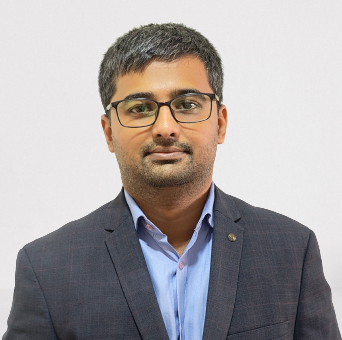
Hitul Mistry
CEO, Insurnest
An InsurTech leader with more than a decade of experience across insurance and technology, focused on solving business problems with the help of technology. Has worked with brokers, insurance carriers, and reinsurance firms across the India, UAE, and US markets.
View LinkedIn profile →
