AI Underwriting Assistant India: Only 22% in Production, Why?
On this page
- The AI Underwriting Assistant Workflow in India: Brief First, Judgment Second
- What Does "Review the Brief, Apply Judgment, Move On" Look Like in Practice?
- What Is Inside the Decision Brief That the AI Assistant Delivers?
- How Does the AI Underwriting Assistant Handle Complex Medical Cases?
- What Happens When the Assistant Flags Something the Underwriter Disagrees With?
- How Does the AI Underwriting Assistant Impact Team Performance?
- What ROI Does the AI Underwriting Assistant Deliver in India?
- Sources
- Frequently Asked Questions
The AI Underwriting Assistant Workflow in India: Brief First, Judgment Second
An AI underwriting assistant in India changes one fundamental thing about the NSTP workflow: the order of operations. Instead of reading documents first and deciding second, the underwriter receives a pre-analyzed brief and applies judgment immediately. The reading is already done. The checks are already run. The evidence is already organized. The underwriter reviews the brief, verifies flagged items, makes the decision, and moves on.
In 2025, underwriting AI adoption reached 14% globally with a trajectory toward 70% by 2028. The companies deploying AI into underwriting workflows reported 30-40% productivity gains. For Indian health insurers processing thousands of NSTP cases monthly, the AI underwriting assistant in India is not an efficiency tool. It is a structural workflow change that determines whether backlogs grow or shrink.
What Does "Review the Brief, Apply Judgment, Move On" Look Like in Practice?
It means the underwriter's workflow consists of three focused steps instead of the traditional six-step manual process. The AI underwriting assistant in India compresses the preparatory work into a delivered output.
The Three-Step Workflow
The underwriter opens the decision brief (1-2 minutes). They review flagged risk signals and anomaly alerts, verifying any that need source document confirmation (2-4 minutes). They apply their judgment, finalize the decision with notes, and submit (2-3 minutes). Total: 8-12 minutes per case.
The Traditional Six-Step Workflow It Replaces
| Step | Traditional Process | Time |
|---|---|---|
| 1 | Open case, inventory documents | 2-3 min |
| 2 | Read each document sequentially | 20-30 min |
| 3 | Cross-reference lab values | 5-8 min |
| 4 | Check for missing tests | 3-5 min |
| 5 | Draft decision notes | 5-10 min |
| 6 | Submit for approval | 2-3 min |
| Total | Manual review | 45-60 min |
Where the Time Goes
The AI underwriting assistant in India eliminates the reading and cross-referencing phases entirely. It does not speed them up. It replaces them with a delivered output. The underwriter's time goes exclusively to judgment and verification, which is the work that requires human expertise.
What Is Inside the Decision Brief That the AI Assistant Delivers?
The decision brief is a single structured document that consolidates findings from all four modules of Underwriting Risk Intelligence into an actionable format.
Risk Signal Summary
The brief lists every detected risk signal from the 35-parameter medical risk scan. Glucose trends, BMI verification, blood pressure patterns, lipid profiles, liver enzyme levels, cardiac markers, hereditary condition indicators, prescription history analysis, and lifestyle risk flags. Each signal includes the source document, page reference, and extracted value. The health underwriting accuracy improvement comes from this comprehensive signal extraction.
Anomaly Alert Section
The 27 anomaly checks produce alerts organized by severity. Critical alerts (blood group mismatches, credential fraud) appear at the top. Warning-level alerts (unusual stamp patterns, minor reference range variations) follow. Each alert includes the specific documents and values that triggered it, enabling quick verification. Pre-issuance fraud detection becomes systematic rather than luck-dependent.
Missing Document List
The missing document engine section lists every test ordered, referral made, or follow-up recommended in the submitted documents that does not have a corresponding result in the file. Each entry includes the source reference where the order or referral was mentioned.
Pre-Filled Decision Template
The brief concludes with a template that the underwriter completes: accept, decline, loading percentage, exclusions, and notes. The template pre-fills with the evidence summary so the underwriter's decision notes reference specific findings rather than general impressions.
How Does the AI Underwriting Assistant Handle Complex Medical Cases?
Complex NSTP cases with multiple specialist consultations, hospitalization histories, and long medication lists are exactly where the AI underwriting assistant in India adds the most value.
Multi-Specialist Cross-Referencing
When a case includes reports from a cardiologist, endocrinologist, and nephrologist, the assistant cross-references findings across all three. If the cardiologist notes stable cardiac function but the lab report shows elevated troponin levels, the inconsistency is flagged. Clinical inconsistency detection across specialists catches what sequential reading often misses.
Medication Interaction Analysis
The assistant maps the complete medication list from prescription records and checks for interactions, contraindications, and gaps. A patient on blood thinners who also received a prescription for an NSAID from a different physician creates a flag. Conflicting diagnoses extend to conflicting treatment plans.
Hospitalization Timeline Mapping
When discharge summaries reference prior hospitalizations, the assistant verifies whether those prior events were disclosed in the proposal form. A discharge summary that mentions "third admission for the same condition" when the proposal declares no prior hospitalization triggers a non-disclosure at proposal flag.
Hereditary Risk Pattern Recognition
Family medical history from the proposal form is correlated with the applicant's own medical findings. If the proposal mentions family diabetes history and the applicant's fasting glucose is at the upper end of normal with no HbA1c test ordered, the assistant flags the combination as a monitoring gap.
What Happens When the Assistant Flags Something the Underwriter Disagrees With?
Disagreement is expected and healthy. The AI underwriting assistant in India is designed to over-flag rather than under-flag, and the underwriter's judgment overrides every alert.
False Positive Handling
Not every flag requires action. A minor reference range variation between two reputable labs may be clinically insignificant. The underwriter reviews the flag, confirms it is a false positive, and dismisses it with a note. The system learns from these dismissals to improve future calibration.
Clinical Judgment Override
The assistant may flag a lab value as elevated based on reference ranges, but the underwriter recognizes that the value is within acceptable limits for the applicant's age and medication profile. The override is recorded with the underwriter's clinical reasoning, strengthening the underwriting explainability trail.
Feedback Loop
Every override, dismissal, and correction feeds back into the system's calibration. Over time, the false positive rate decreases for the specific patterns and contexts that underwriters consistently dismiss. This continuous improvement is what separates underwriting intelligence in 2026 from static rule-based systems.
How Does the AI Underwriting Assistant Impact Team Performance?
The impact extends beyond individual case processing to team-level capacity, quality, and development.
Throughput Scaling
| Metric | Without Assistant | With Assistant |
|---|---|---|
| Cases per underwriter/day | 15-25 | 40-60 |
| Review time per case | 45-60 min | 8-12 min |
| Team capacity (5 underwriters) | 75-125 cases/day | 200-300 cases/day |
| Backlog clearance | Chronic delays | Near real-time |
Quality Standardization
Every case receives the same 62 checks regardless of the underwriter's experience level, workload, or time of day. Underwriting consistency in India becomes a system property rather than an individual attribute. A junior underwriter working with the assistant produces decisions of comparable thoroughness to a senior underwriter.
Knowledge Transfer
The structured decision brief serves as a training document. Junior underwriters see exactly what senior-level review looks for: which signals matter, which combinations indicate elevated risk, which anomalies suggest fraud. Health underwriter career development in India accelerates when every case comes with an expert-level analysis.
What ROI Does the AI Underwriting Assistant Deliver in India?
The ROI combines throughput gains, prevented losses, and operational efficiency into a clear financial case.
Direct Financial Impact
Annual investment of Rs. 20-35 lakhs generates Rs. 4-6 crore in value through three channels: throughput improvement that avoids new hiring, fraud detection that prevents claim payouts, and loss ratio improvement from better risk selection. The underwriting ROI model shows payback within the first quarter of deployment.
Loss Ratio Contribution
With fraud detection rates improving from 60-75% to over 90%, and risk signals that were previously missed now flagged on every case, the health insurance loss ratio improves by 4-8 percentage points. This translates directly to insurer profitability.
Operational Efficiency
The AI underwriting assistant in India eliminates the need for manual CUO audit reviews on sampled cases because every case already carries a complete evidence trail. Health insurance audit readiness becomes automatic rather than a quarterly scramble.
The AI underwriting assistant in India does not add another tool to the underwriter's workflow. It restructures the workflow itself. Read the brief. Verify the flags. Apply your judgment. Move to the next case. That is the new rhythm of NSTP underwriting.
Sources
Frequently Asked Questions
What is an AI underwriting assistant in India?
An AI underwriting assistant in India is a system that reads all documents in an NSTP case, runs 62 parallel checks, and produces a structured decision brief that the underwriter reviews before making accept, decline, or loading decisions.
How does the AI assistant change the underwriter's daily workflow?
The underwriter moves from reading 15 documents per case to reviewing a single decision brief. They verify flagged risk signals, check anomaly alerts, confirm missing documents, and apply their judgment to the organized evidence.
Does the AI assistant make underwriting decisions?
No. The AI assistant produces evidence briefs with flagged signals. Every accept, decline, loading, and exclusion decision remains with the human underwriter.
What types of signals does the AI assistant detect?
It detects 35 risk signals covering medical, lifestyle, and hereditary indicators, plus 27 anomaly signals covering document fraud including stamp patterns, blood group mismatches, reference range inconsistencies, and credential verification.
How fast does the AI assistant produce a decision brief?
The decision brief is produced in under 3 minutes after case submission, compared to 45-60 minutes of manual document review that was previously required before the underwriter could begin formulating a decision.
Can the AI assistant handle cases with multiple specialist reports?
Yes. The assistant processes all documents in parallel regardless of count, cross-referencing data across specialist reports, lab results, and physician notes to identify inconsistencies that sequential human reading might miss.
What is the accuracy of the AI underwriting assistant?
The assistant achieves over 90% fraud detection rates and catches arithmetic errors, missing documents, and cross-document inconsistencies that manual review misses in approximately 30-40% of NSTP cases.
How does the AI assistant improve audit readiness?
Every decision brief includes a complete evidence trail documenting which documents were processed, which checks ran, what was flagged, and the underwriter's final decision, creating an automatic IRDAI-compliant audit record.
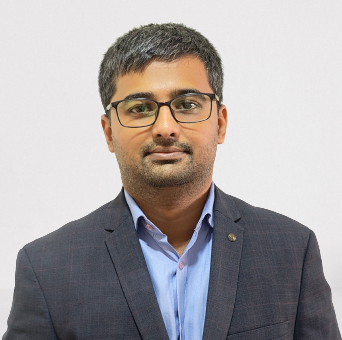
Hitul Mistry
CEO, Insurnest
An InsurTech leader with more than a decade of experience across insurance and technology, focused on solving business problems with the help of technology. Has worked with brokers, insurance carriers, and reinsurance firms across the India, UAE, and US markets.
View LinkedIn profile →
