AI in Reinsurance Underwriting: Signal, Noise, and Model Risk
On this page
- Where does AI create the most value in reinsurance underwriting?
- How do reinsurers separate signal from noise?
- What is model risk, and why is it acute in reinsurance?
- How does generative AI change the underwriting workflow?
- How should reinsurers govern AI models responsibly?
- What is the outlook for AI in reinsurance underwriting?
- Sources
- Frequently Asked Questions
Reinsurance underwriting has always been an exercise in decision-making under uncertainty, working from imperfect submissions and sparse data on rare events. Artificial intelligence promises to change that equation — ingesting unstructured submissions in seconds, benchmarking pricing across thousands of programs, and flagging accumulation before it bites. A majority of large reinsurers now report active AI or advanced-analytics programs in underwriting and operations, and industry surveys point to AI as the technology expected to reshape reinsurance most over the next five years (McKinsey, 2024). But the same properties that make reinsurance hard — thin data on extreme events, heterogeneous risks, and long feedback loops — also make it fertile ground for models that confuse noise for signal. The winners will be those who harness AI's speed and scale while governing model risk with actuarial discipline. This is a story about augmentation, not automation.
Where does AI create the most value in reinsurance underwriting?
AI delivers the clearest return where reinsurers face high volumes of unstructured data and repetitive analysis — submission handling, data cleansing, benchmarking, and portfolio monitoring.
Submission ingestion and triage
- NLP extracts exposure schedules, loss runs, and terms from PDFs and spreadsheets.
- Automated triage prioritizes submissions that fit appetite.
Data cleansing and enrichment
- Models standardize inconsistent coding and fill gaps.
- Third-party data enriches exposure with geospatial and hazard context.
Benchmarking and pricing support
- AI benchmarks terms against comparable programs.
- Pricing models flag inadequacy relative to modeled loss cost.
Portfolio drift detection
- Analytics surface accumulation and mix shifts early.
- Alerts trigger stewardship conversations with cedents.
How do reinsurers separate signal from noise?
The central discipline of AI underwriting is distinguishing genuine predictive patterns from artifacts of small, noisy datasets — a challenge amplified by the rarity of large losses.
Feature discipline
- Prefer features with a causal or actuarial rationale.
- Guard against overfitting to sparse loss history.
Validation rigor
- Out-of-sample and out-of-time testing on held-back data.
- Back-testing against historical events and cycles.
Human challenge
- Underwriters and actuaries interrogate model drivers.
- Explainability tools expose why a model reaches its answer.
What is model risk, and why is it acute in reinsurance?
Model risk — the chance a model misleads — is especially dangerous in reinsurance because errors compound across large limits and long tails before they surface.
Sources of model risk
- Flawed or biased training data.
- Misapplied models used outside their valid domain.
- Silent drift as conditions change.
Consequences of unmanaged model risk
- Systematic mispricing and adverse selection.
- Hidden accumulation and correlated tail exposure.
- Reserve inadequacy discovered years later.
The long-feedback-loop problem
- Reinsurance results emerge over years, delaying detection.
- Small pricing errors can embed before they are visible.
| Risk factor | Manifestation in underwriting | Mitigation |
|---|---|---|
| Sparse tail data | Overfitting, false confidence | Back-testing, expert priors |
| Data quality gaps | Biased inputs | Cleansing, validation |
| Model misuse | Wrong domain application | Documented scope limits |
| Drift | Degrading accuracy | Continuous monitoring |
| Opacity | Unexplained decisions | Explainable AI |
How does generative AI change the underwriting workflow?
Generative AI accelerates the language-heavy parts of underwriting — summarizing submissions, reviewing contracts, and retrieving knowledge — but its outputs demand verification.
Submission summarization
- Rapid summaries of long submission packs.
- Extraction of key terms and red flags.
Contract and clause review
- Comparison of wordings against benchmark libraries.
- Identification of non-standard or ambiguous terms.
Guardrails on generative outputs
- Human validation before pricing or coverage impact.
- Controls against hallucination and confident error.
How should reinsurers govern AI models responsibly?
Effective governance scales oversight to model impact, embedding validation, transparency, and human control throughout the model lifecycle.
Model risk management framework
- Inventory all models with owners and documentation.
- Independent validation and periodic revalidation.
Bias, drift, and fairness testing
- Monitor for unintended bias and performance drift.
- Retrain and recalibrate on a defined cadence.
Human-in-the-loop controls
- Confidence thresholds for automated actions.
- Escalation of edge cases to senior underwriters.
InsurNest builds governed AI into the underwriting workflow — automating submission triage and data cleansing while preserving explainability, validation, and human oversight so reinsurers gain speed without ceding control.
What is the outlook for AI in reinsurance underwriting?
AI will become table stakes for competitive reinsurance underwriting, but its value will depend on data quality, governance, and the judgment of the people using it.
From pilots to production
- AI moves from experiments to embedded workflow.
- Data infrastructure becomes the binding constraint.
The augmented underwriter
- Underwriters spend more time on judgment, less on data.
- Analytical fluency becomes a core skill.
Competitive divergence
- Data-rich reinsurers pull ahead on selection and pricing.
- Governance maturity separates durable programs from fragile ones.
Sources
Frequently Asked Questions
How is AI used in reinsurance underwriting?
Reinsurers use AI to ingest and triage submissions, cleanse exposure data, benchmark pricing, detect portfolio drift, and support treaty and facultative decisions with faster, richer analytics.
Does AI replace reinsurance underwriters?
No. AI augments underwriters by automating data handling and surfacing insight; final judgment on complex, relationship-driven treaty risk remains human, with AI as decision support.
What is model risk in AI underwriting?
Model risk is the danger that a model produces wrong or misleading outputs due to flawed data, assumptions, or use. In underwriting it can lead to mispricing, adverse selection, or hidden accumulation.
How do reinsurers separate signal from noise?
Through disciplined feature selection, out-of-sample validation, back-testing, and human review — ensuring models capture genuine predictive patterns rather than spurious correlations in limited data.
Where does generative AI fit in reinsurance?
Generative AI accelerates submission summarization, contract and clause review, drafting, and knowledge retrieval, but its outputs require validation before informing pricing or coverage decisions.
What data quality challenges affect AI underwriting?
Incomplete exposure schedules, inconsistent coding, and thin historical data for rare perils all degrade model reliability, making data cleansing and validation prerequisites for AI value.
How should reinsurers govern AI models?
With a model risk management framework: inventory, documentation, independent validation, bias and drift testing, explainability, and human-in-the-loop controls proportional to model impact.
Can smaller reinsurers adopt AI affordably?
Yes. SaaS tools for submission triage, data cleansing, and portfolio analytics let smaller reinsurers and MGAs gain analytical capability without building models from scratch.
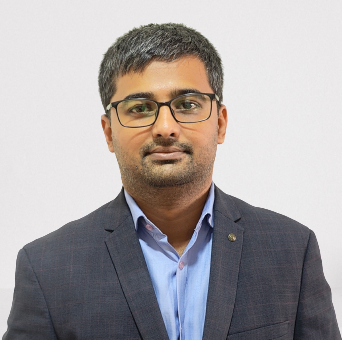
Hitul Mistry
CEO, Insurnest
An InsurTech leader with more than a decade of experience across insurance and technology, focused on solving business problems with the help of technology. Has worked with brokers, insurance carriers, and reinsurance firms across the India, UAE, and US markets.
View LinkedIn profile →
